

Munich Was an Anti-American Hatefest
Trump should quiet-quit NATO, refocus on Asia and the Gulf, enforce neutrality in Ukraine War.

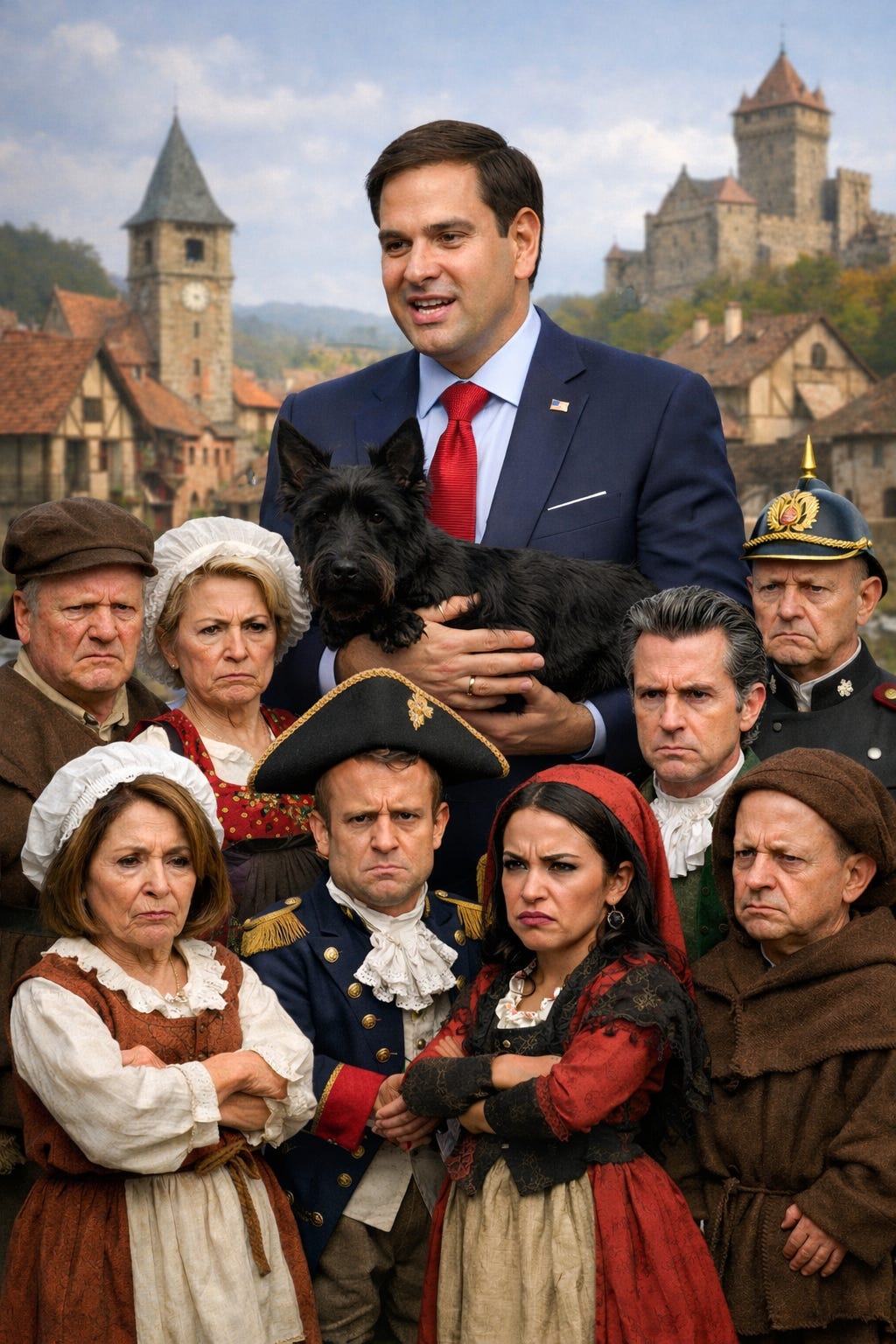
Treason season kicked off strongly last week in the German city of Munich, birthplace of the Nazi Party.
European globalists piled on the United States and President Donald Trump, joined by a parade of lefty and squish American poohbahs complaining about their country at the Munich Security Conference.
It fell to Secretary of State Marco Rubio to defend America—and defend it he did.
Rep. Alexandria Ocasio-Cortez of New York, a contender for the Democratic presidential nomination in 2028, bemoaned U.S. actions that supposedly “enabled a genocide in Gaza.” She asserted America is “very much in a compromised position compared to where we were five years ago.”
Huh?
Five years ago, under the Democrats, U.S. power took its biggest blow since the Fall of Saigon when Joe Biden’s staff oversaw a panicked defeat at the hands of the Taliban.

Sen. Richard Blumenthal (D-Connecticut), who is known as “Da Nang Dick” because he boasted that he served in Vietnam but never actually went there—an act of stolen valor after which he inexplicably is allowed to remain in the Senate and on the Armed Services Committee—said, “The fundamental, core source of European anxiety is Donald Trump’s whiplash, vacillating on Ukraine and Putin and other threats like China.”
Anxiety?
Why doesn’t Da Nang Dick pretend to be a doctor and prescribe something for that? Or maybe he could try being a patriotic American and suggest that Europeans might be less anxious if they stopped blaming America for their problems, stopped mooching off us, stopped screwing us on trade, and took care of their own neighborhood so we could focus elsewhere—on parts of the world that matter to the future.

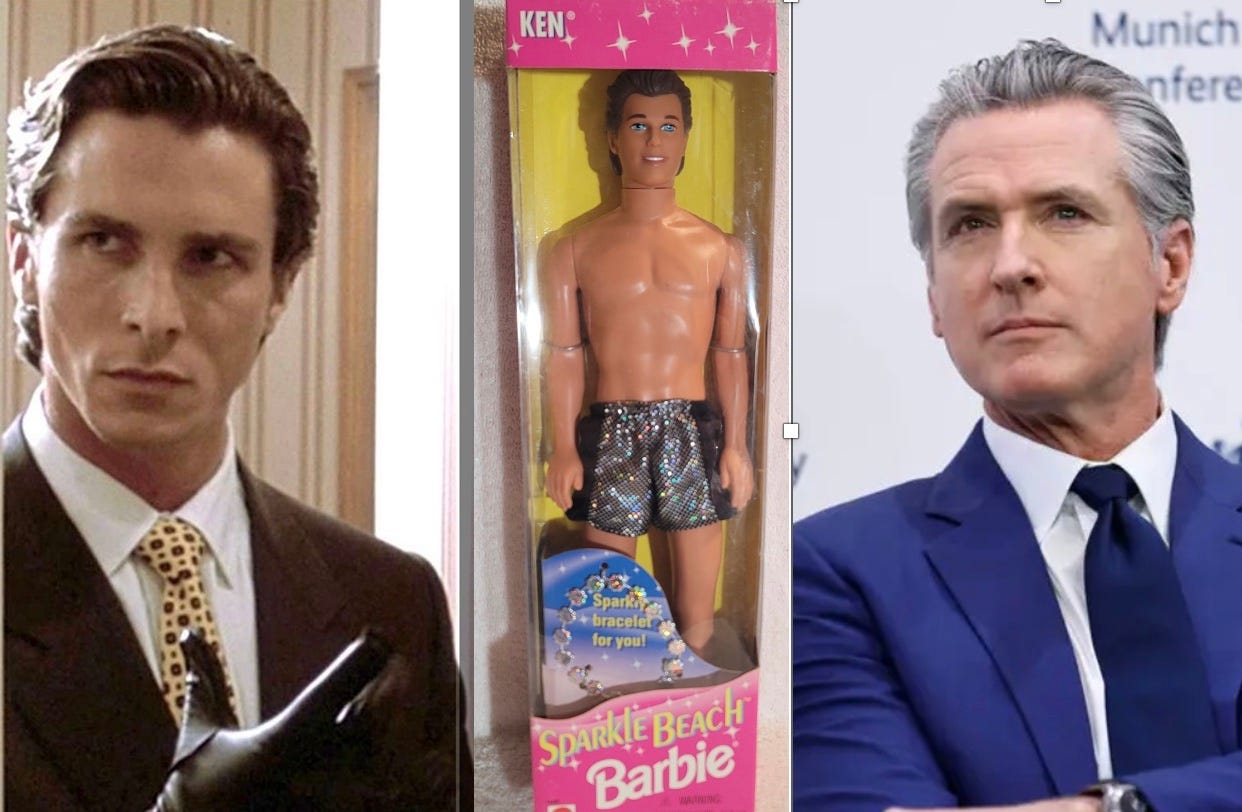
California Governor Gavin Newsom, another contender to be the Democrat who loses to a Republican in the 2028 presidential race, and whom Treasury Secretary Scott Bessent perfectly described as “Patrick Bateman meets Sparkle Beach Ken,” told the crowd that “Donald Trump is temporary—he’ll be gone in three years.”
Democrats weren’t the only ones apologizing for America and hoping to undermine Trump and the first successful U.S. foreign policy since the Reagan-Bush era (1981–1993).
Sen. Lisa Murkowski (R-Alaska) said that the potential annexation of American Greenland upset her pointless meetings and “distracted in ways that I don’t think that any of us could have anticipated.” She added, “This is not the way the United States should lead.”
Better idea: Europeans should try leading Europe. Americans should lead America.
Sen. Thom Tillis (R-North Carolina) took on a “prominent role” among the apologizers, at least according to the New York Times—a shocking prospect since he has spent 20 years in elective office without anyone noticing. Treasonously, Tillis said:
I’m here in Munich to basically remind everybody that we have three coequal branches of government. The president is trying to get our NATO allies to perform more strongly and have some level of independence, but the Congress has their back.
One is reminded of Ted Kennedy’s urging of Soviet leadership to ignore President Ronald Reagan. At age 250, America does still have three separate branches of government. But they are most certainly not “coequal” in matters of national defense, where a president’s supervisory authority stemming from his power as commander in chief is near plenary.
Presidents command; congressmen attend things.
Better advice to Europeans would be to listen to Trump, recognize the New Right is here to stay, and spend less time indulging diplo-tourists from the failed legislative branch.
Defending the United States fell to Secretary of State Marco Rubio. Trump’s top diplomat was actually more detailed than Vice President JD Vance was last year, who shocked the audience with some basic realities about their rapid decay and growing irrelevance. Vance gave some examples of systematic European censorship of citizens and other elite schemes to undermine democracy, and stated the truism: “If you’re running in fear of your own voters, there is nothing America can do for you. Nor, for that matter, is there anything that you can do for the American people…”
Rubio’s focus and tone were a little different. He bookended his speech with soothing and accurate language about past U.S.-European cooperation.
But the heart of Rubio’s speech was as bold as Vance’s and covered even more of Trump’s agenda. Rubio specifically rejected globalism and deindustrialization (i.e., echoed the fundamental basis of Trump trade policy), ridiculed those who “appease a climate cult”—basically Europe’s mandatory state religion—called out failed international organizations, criticized European underspending on defense and overspending on welfare, condemned mass migration, advocated “cohesion of our societies, the continuity of our culture,” and observed that “Armies fight for a way of life”—presumably not make-believe constructs like a “rules-based international order” that never actually existed in the real world, but lives on in the minds of globalists.
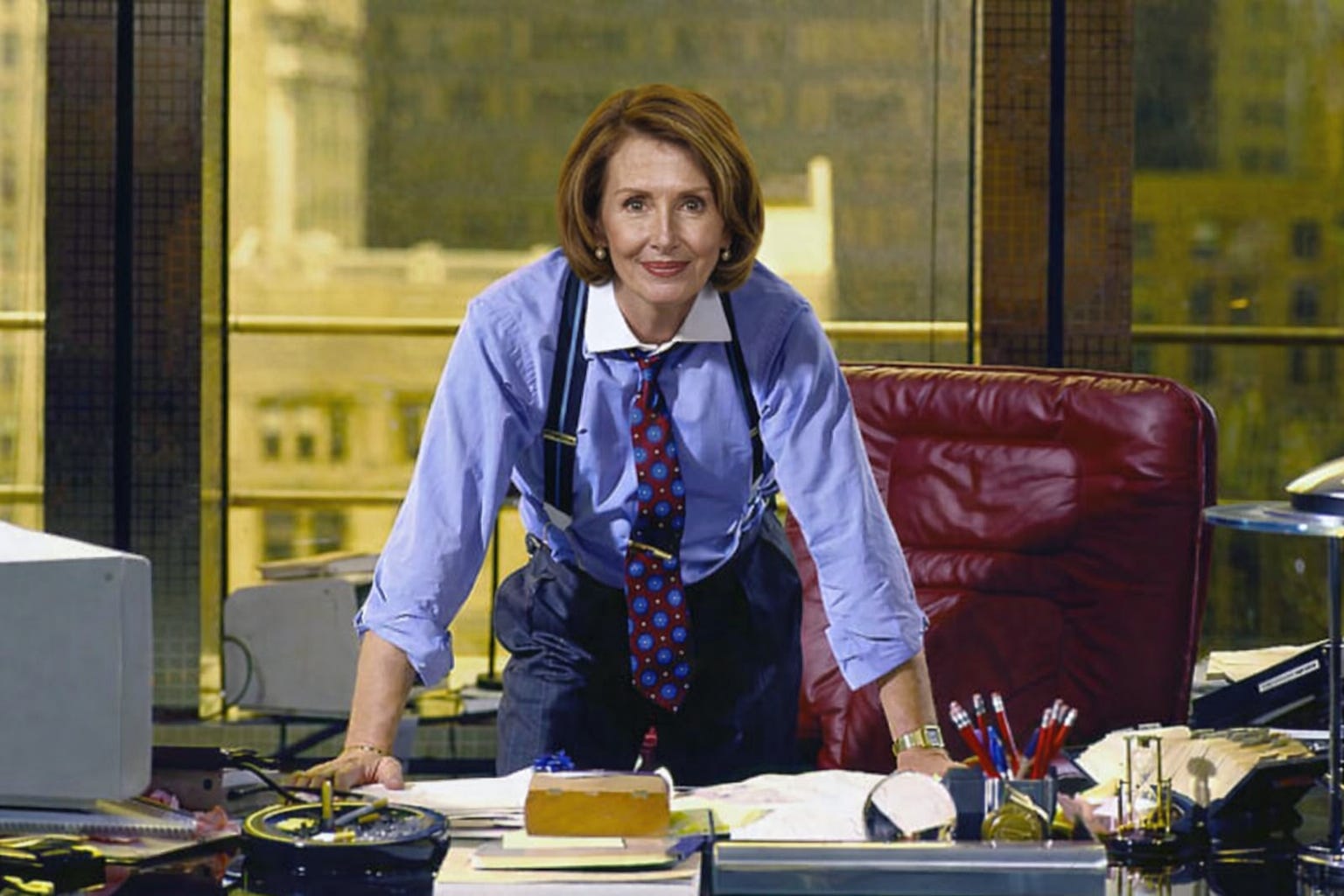
Despite this reality, even the globalists seemed comforted at first. Nancy Pelosi, the Democrat former Speaker of the House and stock picker par excellence, complimented: “Secretary Rubio’s speech was well received… Compare this to Vice President Vance’s speech last year… This was much better.”
It took a weekend, but the pinkos at the UK Guardian, which rivals the UK state broadcaster BBC for spreading anti-American propaganda overseas and promoting leftism within the United States, realized Trump policy had not shifted. An anti-American reporter there had discovered by Monday:
But beneath the surface, Rubio’s speech this year and Vance’s in 2025 were two sides of the same coin… Rubio’s speech was more subtle and coherent, but he in essence sang from the same hymn sheet: the message from Washington remains that Europe and the United States should be defined by ethno-political values of culture, tradition and religion. The fact that such history has also bred nationalism, racism, fascism and colonialism is apparently nothing to be ashamed of.
The fact that the audience this year was leaping with joy that Rubio built in some comforting language shows how pathetic they are. Their highest aspiration is not listening to warnings across U.S. administrations and correcting failed economic, energy, cultural, and military policy, but just hoping their failings aren’t spotlighted too bluntly when they are in their safe spaces.
Beyond being pathetic, there is the question of whether European leaders are actually stupid.
French president and domestic-abuse victim Emmanuel Macron said that Europe is a model.
It isn’t.
He said that “Everyone should take their cue from us…”
They shouldn’t.
Macron, who is litigating in Delaware Superior Court against someone who asserted that his wife was a man, condemned a tendency “to overlook Europe, and sometimes, to criticize it outright,” to dismiss it “as an aging, slow, fragmented construct,” “a society prey to barbaric migrations,” and even “as a repressive continent where speech would not be free.”
That pretty much nails it.
European Union President Ursula Von Lederhosen, who would like to be the unelected Empress of Europe, made a thinly veiled attack on Trump over his plans to secure American Greenland, saying: “Some lines have been crossed that cannot be uncrossed anymore.”
What exactly are you going to do about that, madam? Hold a conference?
The Polish foreign minister, Radoslaw Sikorski, belittled Trump’s efforts to end the Ukraine War—which are quite substantial and magnanimous considering that Ukraine’s fanboys in America tried to assassinate Trump and helped precipitate the Russia hoax and phony first impeachment of Trump.
Sikorski told Polish Radio that “I believe that the position of the Trump administration toward Ukraine is shameful,” and added that Trump officials have broken an unwritten rule of noninterference in allies’ internal affairs by criticizing Europe’s growing Orwellian censorship.
That’s a pretty rich claim considering that America’s European “allies” from London to Kiev devote extraordinary effort to tampering in U.S. internal affairs and helping to elect globalist Democrats. (Sikorski is married to Anne Applebaum, who likened Trump to “Hitler, Stalin, and Mussolini” while serving on the board of the U.S. National Endowment for Democracy, to which congressional Republicans just inexplicably helped Democrats restore taxpayer funding.)
German Chancellor Friedrich Merz said, “We do not believe in tariffs and protectionism, but in free trade.”
Total lie: Germany has long relied on higher tariffs on America than America had on it.
Germany previously said it would plus up its spending by 100 billion euros and then 500 billion euros to get serious about defense against the Russian bogeyman.
It hasn’t.
Outlining an alternative vision for a world order that would last a thousand years, the German leader added, “We have to understand that in the era of big powers, our freedom is no longer a given. It is at stake. We will need to show firmness and determination to assert this freedom.”
They won’t.
Ripping on Trump and seeking some political lebensraum for his wildly unpopular government, Merz said, “The culture wars of MAGA in the U.S. are not ours.”
But they are.
And they will probably topple every major European government within years. If free and fair elections were held today in Britain, France, and Germany, all three governments would be replaced by “populist” alternatives—also known as accountable government.
At the supranational level, which is even less accountable to voters, NATO Secretary General Mark Rutte plainly lied to the gullible crowd in Munich. Referring to the Ukraine War, he imagined:
What I will also be doing today and tomorrow is make clear that the Russians are not winning this, as some are thinking. This so-called Russian bear is not there. It is basically the stilted speed of a garden snail what we are seeing in Ukraine, this is how the Russians are moving inside Ukraine, very slow.
This is an infamous lie—on par with the military lies out of the Iraq War or Pollyannish “Five O’clock Follies” press conferences in Saigon before communist forces overran the country.
Russia is winning the Ukraine War. While Moscow’s gains are slow, they are accelerating. In the medium term, the pace may slow, be reversed, continue as is, or even accelerate and precipitate a collapse of Ukraine’s defenses similar to the sudden collapse of German defenses in 1918 after years of stalemate in World War I.
I don’t know which outcome will occur, but neither apparently does the head paper shuffler at NATO. But his mendacity does say a lot about the state of NATO. And that state is one of failure.
Germany’s defense minister, Boris Pistorius, criticized the United States and talked up NATO, “which has been the most successful alliance in the history of mankind.” This is a widely used talking point. For example, the aforementioned Sen. Tillis called NATO “the most important alliance in the history of mankind.”
Lie.
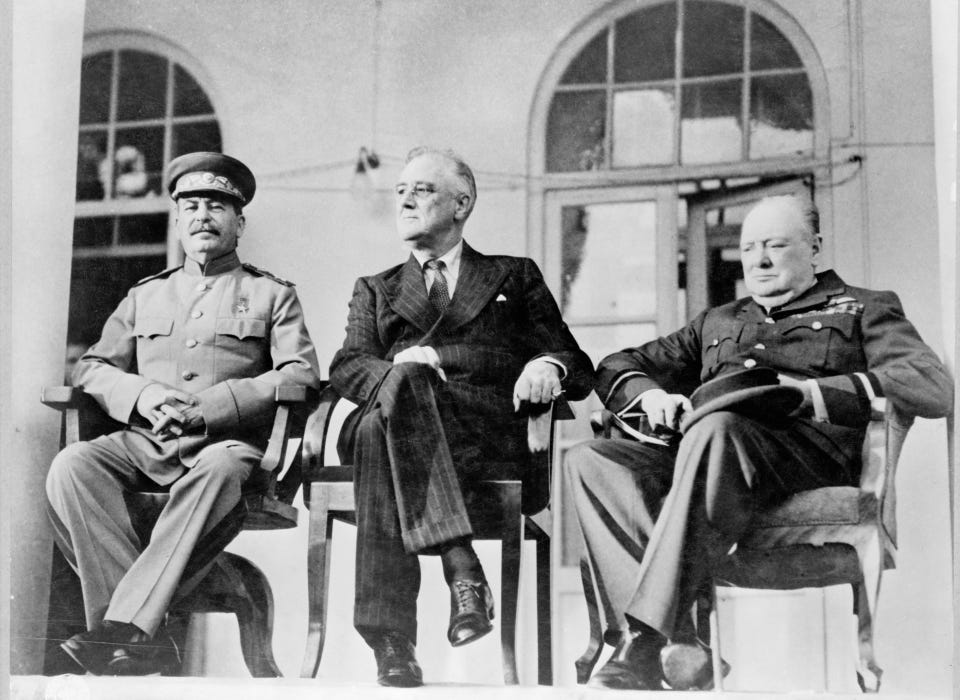
The “Big Three” alliance of World War II, which consisted of the United States, Britain, and the Soviet Union, successfully put an end to the biggest and deadliest war in history—a war Pistorius’s country started. That was obviously the most successful alliance in history, not NATO. Furthermore, beginning in the 6th century BC with the Peloponnesian League, historians could easily list a dozen more consequential alliances than NATO that deterred war or prevailed in war.
The frequency and ferocity with which NATO’s supposed awesomeness is espoused is a tell as to just how much of an obsolete paper tiger it is—not to mention the broader European political project.
NATO failed at its most important post-Cold War mission, which was stabilizing Afghanistan while the United States was busy in Iraq. In 2009, amid obvious NATO failure, the United States had to send 30,000 troops to Afghanistan. NATO’s “International Security Assistance Force” didn’t officially die until 2014—coincidentally the year Russia knew enough about the paper tiger of preening conference-attenders to invade Ukraine with impunity.
Moscow also presumably was not impressed by another NATO failure, which was the 2011 intervention in Libya—which led to the long-term failed state that still exists today. The action was started by France and Britain, with the United States supposedly in a supporting role. However, the French and Brits ran out of precision-guided munitions within weeks and required a bailout from the United States.
Outside of NATO, our European allies also have a similarly ignominious legacy. Britain sent troops to help the United States in Iraq. Their job was to secure relatively calm Basra while U.S. forces fought the heart of the insurgency in Iraq’s Sunni Triangle. But British officers paid off the insurgent Mahdi Army, allowing it to expand its insurgency so long as it minimized attacks on British troops. American forces eventually had to replace the Brits, who might as well have stayed home.
That period also saw the French government led by Jacques Chirac attempt to lead an international political coalition to undermine the United States. His successors would continue in this manner during the first Trump administration, when France, Britain, and Germany colluded to undermine U.S. “secondary” sanctions on Iran over its nuclear weapons program. The Europeans also attempted to undermine the role of the U.S. dollar in international trade.
This simply does not fit what normal people would describe as the conduct of allies.
Europe also has a rendezvous with economic irrelevance. As U.S. Ambassador to the European Union Andy Puzder wrote in the Financial Times in December:
The evidence of the European Union’s economic decline is compelling. As recently as 2011, the bloc’s nominal gross domestic product was slightly above that of the United States. For 2025, the International Monetary Fund projects that it will be 18 per cent lower including the UK, and 31 per cent lower excluding it.
Puzder has also noted that the per capita gross domestic product for Germany—once a global model for economic power—is now similar to that of West Virginia. And John Denver didn’t sing “Take Me Home—Country Roads” about West Virginia because the place was like Beverly Hills.
For Munich to turn into an anti-American hatefest where Trump Derangement Syndrome goes global was probably always baked in the cake. The conference is funded by the left-wing German government, and there is also reporting that the government of Qatar has provided multimillion-dollar contributions since 2020.
This year, the organizers made the conference’s theme “Under Destruction” and prefaced the event with a report that bemoaned “…the far-reaching consequences of the rise of political forces that favor destruction over reform.” In case anyone wondered who the culprit of the report would be, the authors helpfully declared: “The most powerful of those who take the axe to existing rules and institutions is U.S. President Donald Trump.”
There is no helping this political class. A year has gone by after Vance’s stark assessment and warning, and nothing significant has changed. Nothing will change a year from now.
The United States should accept that Europe, barring major political change that can come only from a populist revolution, is a fading has-been. It is a place for second-rate wine and third-rate vacations. It will be minimally relevant to the events and places of the world that matter most.
Japan, not Britain, is now America’s most important and best ally. China is America’s greatest foreign challenge—one with which Europe cannot and will not help. The Middle East is undergoing radical change and becoming a hub of finance, energy, and technology. The U.S. economy and military, not a make-believe “rules-based international order,” are what counterbalance malicious threats. The United States is the most attractive place to work and invest in the world. The future of the next decades runs from America through Northeast Asia to the Middle East.
Trump has made it clear he wants to save NATO rather than withdraw formally from the organization. However, the United States ought to “quiet quit” the organization, beginning with gradually shifting the 80,000 Americans stationed in Europe to the Western Pacific, where they can be relevant and therefore help deter a China-related conflict. Intelligence-gathering and targeting tools should also be repurposed for the Western Pacific.
It seems pretty clear that neither Russia nor Ukraine really wants to stop fighting, despite the tireless effort of Trump and his negotiators. Washington should shift to a policy of neutrality, which would position the United States better to mediate if and when both sides really want to stop fighting. In the meantime, top U.S. national interests are to avoid a war with Russia and seek areas of cooperation or at least nonconfrontation with Russia to minimize Chinese-Russian cooperation.
Members of the European political class can watch and attend all the conferences they want. But it would be nice if they stopped bothering us about a future that does not concern them.

My only disagreement with this article is vis a vis Ukraine. The Russians are in even worse shape than NATO. I don’t know how it ends. I don’t know what final territorial integrity looks like. Putin is too deluded to grasp Trump is throwing him a life line. My guess is Russia continues to make marginal gains then collapses. Failure will end Russia as it is currently configured. The first casualty will be Putin either through ouster (less likely) or retirement (more likely). He has at least temporarily thrown any progress away. Russias only hope is to untapped its natural and Human Resources. It is a long way from realizing this and may not happen in my lifetime
Outstanding commentary & observations, Christian! I like the term & suggestion "quiet quit" for NATO & recommendation for neutrality in the Ukraine/Russian war. Good advice, but we still have many in Congress who want U.S. taxpayers to keep subsidizing Zelensky.