

The Joy of Regime Change
Rubio as Trump’s indispensable cabinet member.

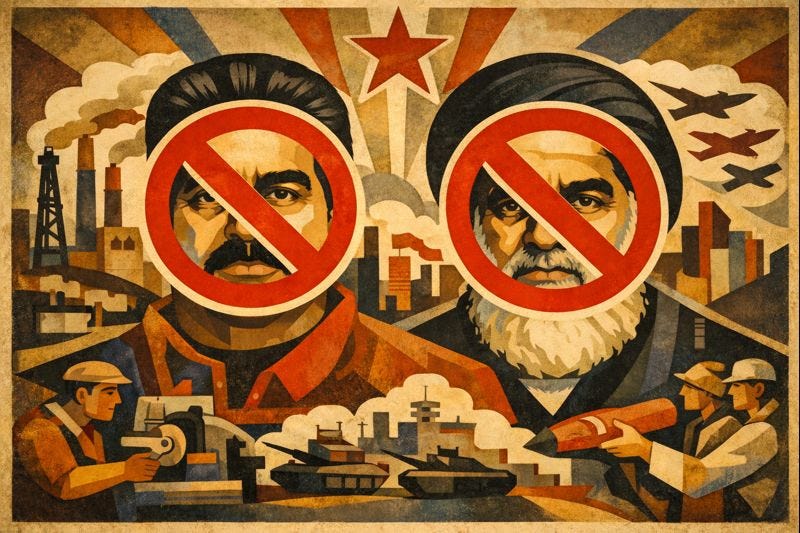
Geez, Donald, when we sang “Auld Lang Syne” on New Year’s Eve—a sentimental Scottish salute to “times long past”—we didn’t necessarily mean it that literally. But five days into the new year, it feels like the old days of seeking to forcibly dispense with dictators who were troublesome for America.
Anno Domini 2026 is off to a retro-feeling, but excellent start.
There is some craziness and some brilliance in Trump’s recent actions and statements regarding Venezuela and Iran, as well as his hints about what might be coming for Colombia and other places run by unpleasant people.
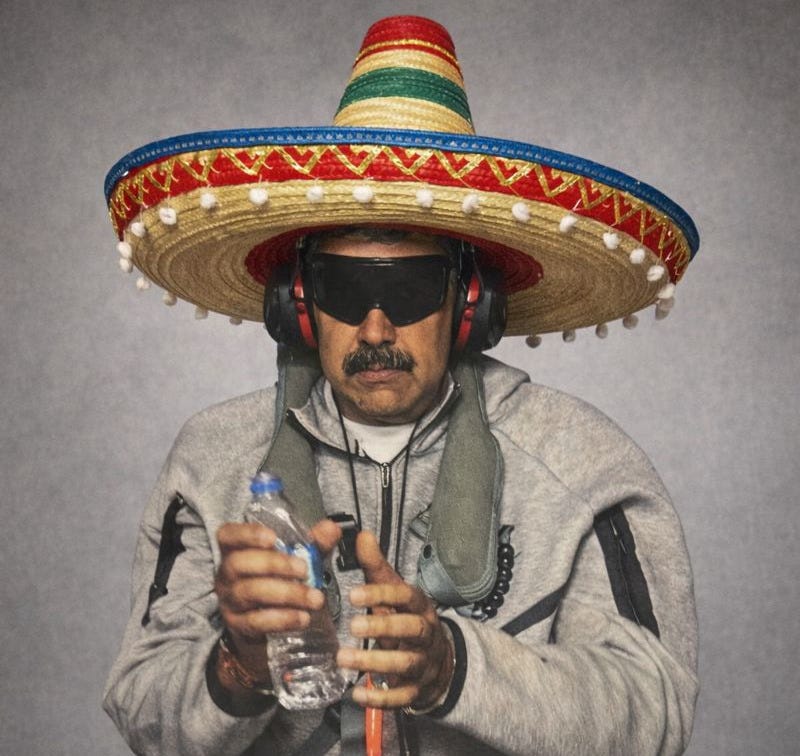
On Saturday night, the U.S. military ousted Nicolás Maduro, the socialist thug who ran Venezuela. He now faces a federal trial in New York on drug and terrorism charges.
Maduro’s patron and predecessor was the late Hugo Chávez, who ushered in the current Venezuelan regime in 1999. Since then, Chávez–Maduro socialism has run Venezuela into the ground. Nominal GDP last year was just one-third of what it was in 2012. It’s as if Harvard and ABC News were running a country.
Venezuela also colluded with the worst imperialist actors in the region and overseas—Cuba, China, Denmark, Russia—to spread chaos, corruption, and socialist misery. It contributed to a surge of illegal migrants to America—basically a hybrid invasion.
So far, so good, then, with Trump’s decisive action. Top officials discussed snatching Maduro during Trump’s first term but considered the operation too risky. In this term, Trump decided to roll the dice, and the U.S. military achieved a remarkable success without any U.S. casualties.
On the other side of the world, Trump also made it clear that he supports the Iranians who are currently braving imprisonment or death to peacefully protest for an end to the Islamist regime that has run that country since 1979, when it came to power and promptly took American diplomats hostage.
Over the years, Tehran has been responsible for the deaths of thousands of Americans. If this country has an ounce left of the “sacred Honor” that the Founding Fathers mutually pledged in the Declaration of Independence—and it does—then all Americans should wish the Iranian regime gone.
On Friday, Trump wrote, “If Iran shoots and violently kills peaceful protesters, which is their custom, the United States of America will come to their rescue. We are locked and loaded and ready to go.”
This statement also falls into the dual categories of brilliance and craziness. Trump valiantly and correctly decided against repeating what clearly does not work in Iran.
When protesters took to the streets against the clerical dictatorship during the presidencies of Barack Obama and Joe Biden, both men basically sat on their hands. Trump has decided it serves U.S. national interests to do more than nothing. He is right: increasing our adversaries’ domestic political pain is smart statecraft, especially with a terrorism-exporting, expansionist, Islamist theocracy like Iran.
But with both Venezuela and Iran, there is a question of whether Trump has gone a step too far, perhaps even doing what American presidents should never really do: bluff.
Specifically, Trump said on Friday of Venezuela: “We’re going to be running it with a group, and we’re going to make sure it’s run properly.” He added: “We’re not afraid of boots on the ground.”
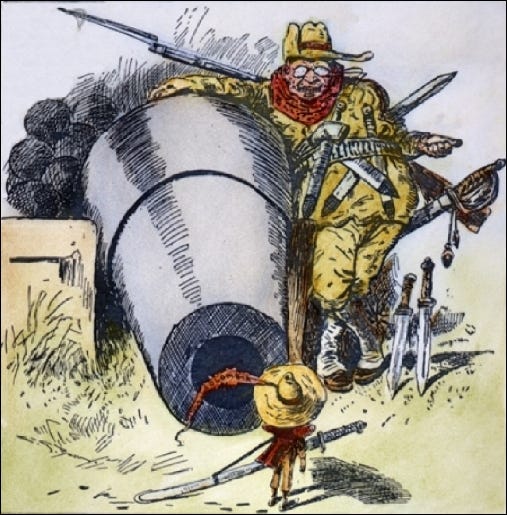
This is a fine sentiment, but it puts a president famous for not getting locked into anything in the position of being committed to an outcome that is difficult to force. He has done so without any actual U.S. military presence in Venezuela—just the threat of more military action.
In an appearance with the fake journalist and former Clinton White House staffer George “Stephy” Stephanopoulos on fake news ABC, which should be de-licensed, Secretary of State Marco Rubio outlined a far more plausible blockade (“quarantine”) of Venezuelan oil exports and described the overall U.S. strategy. The indispensable cabinet member said:
We will no longer have, in our hemisphere, a Venezuela that’s the crossroads for many of our adversaries around the world, including Iran and Hezbollah; that’s no longer sending us drug gangs and drug boats; and that’s no longer a narcotrafficking paradise for drugs coming out of Colombia to go through the Caribbean toward the United States. And obviously we want a better future for the people of Venezuela. Ultimately, legitimacy for their system of government will come about through a period of transition and real elections, which they have not had.
This approach is impressive and correct. It does not guarantee a favorable outcome (or gamble Trump’s foreign policy legacy on one), but it matches the desired outcome with the means the United States can reasonably apply through military and diplomatic methods.
Some Rubio magic could also build off Trump’s statement on Iran about helping protesters. By saying that we “are locked and loaded,” Trump is implying a willingness to use military force. If that is necessary and helpful, so be it. Trump ordered the U.S. military to join Israel in striking Iran’s nuclear-weapons program last June. Foreign policy poohbahs and non-interventionists had long predicted regional war if the United States attacked Iran. Instead, the world saw that the Iranian regime knuckles under when faced with strong resolve from the U.S.-led Free World.
But military force may not be what Iranian protesters need. What was the difference between when Soviet forces brutally suppressed uprisings in East Germany in 1953, Hungary in 1956, and Czechoslovakia in 1968, and when authorities allowed the Eastern Bloc to disintegrate into freedom in 1989? Conceptually, a repressive regime usually gives way when it loses confidence in itself to shoot its own people.
The threat of U.S. military force against Iranian police and military who move against the people could be useful. Also important are other elements of political warfare against the regime. These might include steady and aggressive hectoring that echoes the protesters’ message: the regime is illegitimate, the regime is a disaster, political Islam doesn’t work, the regime has made Iran an economic basket case by funding the export of terrorism and clerical oppression, etc.
Any dissent movement also relies on the dissemination of information and ideas. The Declaration of Independence was the most effective singular act of political warfare in history because it motivated patriots at home and potential allies abroad. Pamphlets like Thomas Paine’s Common Sense and the propaganda and organizing efforts of Samuel Adams—as well as underground newspapers—were also important during the American Revolution.
More recently, during the Soviet era, illicit typewriters and other tools of the samizdat underground press were important. Solidarity, the outlawed union that was at the center of Polish dissent to communist rule, benefited from copy and fax machines smuggled in from the West. External sources of information like Radio Free Europe—a globalist joke today, but a force for freedom from its founding in 1950 as a CIA front through the end of the Cold War—were later described by dissidents as helpful.
Today, people access information and ideas differently. Perhaps Elon Musk could arrange for X—especially Farsi posts not controlled by the regime—to be available on hundreds or thousands of domains to make censorship by the regime harder. When the terrestrial internet goes down altogether, U.S.-backed dissident groups could smuggle Starlink receivers into the country.
Also, Iranians still consume plenty of old-fashioned radio and TV. The U.S. military operates a handful of EC-130J “Commando Solo” aircraft based on the venerable C-130 cargo plane. These bristle with antennas and can propagate radio and TV signals from airspace outside of Iran on a broad range of frequencies to overcome jamming. Handing dissidents a tool to reach their people can be decisive. Government legal eagles will come up with a slew of reasons not to use this tool—a silly and useless UN agency (but I repeat myself) named the International Telecommunication Union and its broadcast guidelines could stand in the way—but the president can roll the lawyers.
Also important is bolstering the opposition. In the case of Iran, there is one that is well organized: the MEK. The group has long been demonized in Washington for vague reasons by progressives and the Deep State, which makes it all the more appealing. It answers the question of “What comes next?” if the Iranian regime is toppled. The MEK can manage a transition to modern, secular democracy. It is anti-Islamist, in favor of modernity and accountable government, and pro-American.
This program, combined with external economic pressure and Trump’s threat of military force, would constitute a coherent utilization of political warfare—which, not coincidentally, is a Marco Rubio specialty.
History will hopefully show that the man who grew up steeped in the Cuban exile experience—shaped by his parents’ story of Cuba’s descent into communism and the repression that followed, and who championed freedom as a senator, grafted this form of advancing the Free World’s interests onto Trump’s America First foreign policy as secretary of state, and benefited America’s security while freeing millions around the globe.
Speaking of the CIA, a digression: Don’t for a moment think the CIA is useful in regard to Iran or Venezuela. CIA Director John Ratcliffe showed up in the Venezuela matter when the CIA’s covert drone force attacked a dock in Venezuela instead of using the U.S. military. This was bizarre: the point of using the CIA for matters outside of stealing information is to achieve deniability for a U.S. president. But it was obvious who blew up the dock, and Trump boasted of the act shortly after its execution. Since the U.S. military was already engaged against Venezuela, the use of the CIA’s air force was a bizarre excursion from the military chain of command and needless muddying of legality by using unprivileged civilian combatants.
Most likely, the show pony Ratcliffe, in offering the attack, was clutching at relevance and wanted to have his picture taken. The chances that Ratcliffe is actually reforming the CIA are zero, since there is not a steady stream of leaks and antipathy coming from Deep State lickspittles at the New York Times and Washington Post. Any real attempt at reform would ignite these channels. At best, Ratcliffe is the Queen Elizabeth of the CIA: present and useful for show, while others make the decisions.
This is also relevant because many wrongly assume the CIA is good at influencing political outcomes (a.k.a. political warfare). This assumption is actually true if the target is a Republican presidential administration. The CIA played an important role in the anti-Trump Russia hoax, and played politics with phony-baloney “national intelligence estimates” that misleadingly downplayed Iranian nuclear advances, which intelligence bureaucrats spoon-fed to a complicit media. But the CIA is out of the business of political warfare against our biggest adversaries. The agency was good at influencing watershed Italian elections in 1948 and deposing an Iranian government in 1953 that wanted to snuggle up to Moscow. However, aside from a brief comeback in the 1980s, it has lost the thread on this part of its original mission.
Today, it’s more likely the Bolshoi would hire a three-legged ballerina than Ratcliffe would whip the agency into shape or be useful in contemporary crises. Where, for example, is the CIA in helping Trump entice Greenland to join the United States? It should be easy to engage in a range of covert and overt acts to entice Greenlanders. Where is the CIA-funded Greenland freedom committee? Where is the offer of Alaska-style trust funds for every Greenland family to profit from future oil and mineral royalties, backed by a federal promise that each family’s account will hold no less than $1 million within five years of becoming a U.S. territory or commonwealth? Are our spooks too busy writing “assessments” that no one important cares about? (I have no idea if the CIA’s recent claim that Ukraine didn’t attack Russian President Vladimir Putin’s home is true, but I am 100% certain the CIA doesn’t actually know.)
Luckily, Trump can rely on his own good instincts and a good secretary of state. He also benefits from good opponents.
After Maduro was snatched, Ilhan Omar, the Minnesota congresswoman and alleged perpetrator of immigration fraud with her brother-husband, said, “Trump’s invasion of Venezuela is blatantly illegal and unconstitutional... Trump is putting our service members in harm’s way as he boasts about taking Venezuela’s oil and resources.”
Top Senate Democrat Chuck Schumer remarked on TV: “And it’s a violation of the law to do what they did without getting the authorization of Congress... we have the War Powers Act... It’s going to come to the floor this week. And if it’s voted for, if it’s voted positively in both houses, then the president can’t do another thing in Venezuela without the okay of Congress.”
Schumer and Mullah Omar are wrong on the law, and more importantly, wrong on the politics.
Regardless of what they tell pollsters, the American people love decisive, successful action by their president.
As for the law, the War Powers Act is make-believe. It was passed in 1973 over the veto of Richard Nixon, then weakened politically by Watergate. But it is the Constitution that makes the president the commander in chief of the military, and no mere law can abridge that.
Ever since President George Washington took command of the military and suppressed the Whiskey Rebellion—without seeking a permission slip from the finger-in-the-wind, sissy Congress—the die has been cast: the president can order military action.
Congress’s power is limited to declaring war (a diplomatic and legal gesture that has been obsolete since 1945) and appropriating or withholding funds from the military. There endeth the role of Congress in military operations—something the Founders understood, including when Alexander Hamilton wrote in the Federalist Papers that “the direction of war most peculiarly demands those qualities which distinguish the exercise of power by a single hand.”
Go home and kiss some babies, Chuck, before AOC takes your seat.
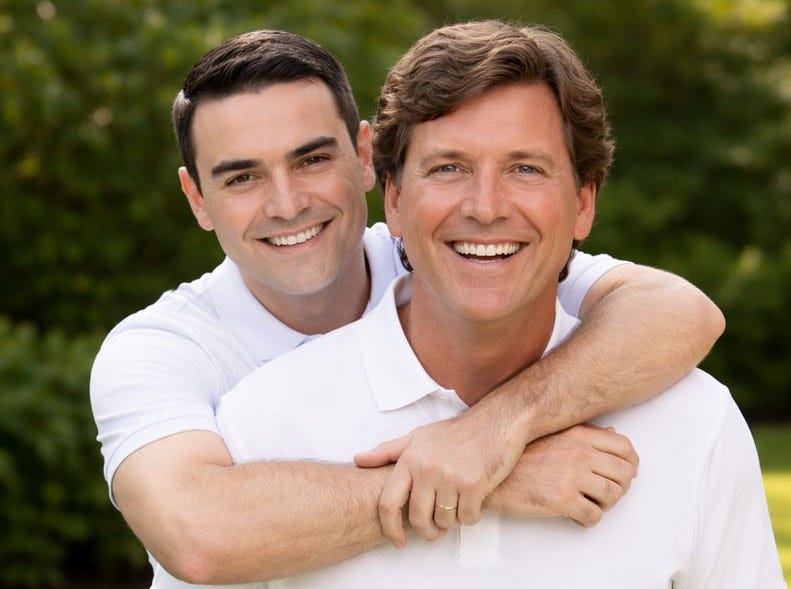
Trump also has useful and deranged opponents on the right. Tucker Carlson is apparently convinced that Trump struck Venezuela in order to advance gay marriage. It is unclear if he believes Zionists are also to blame, but I suspect he will get there. (I knew it was too soon as part of our plan to advance the gay agenda to unleash “West Side Story en Español” and other musicals for Latin American consumption. Because of Tucker’s watchful eye, we’ll delay our plan to make everyone both gay and Jewish, which is of course how control of Hollywood and Zionism generally were brought about. Nevertheless, our plan to eventually gay-marry Tucker to Ben Shapiro still stands.)
Where does this all leave the United States and Trump’s presidency? Operating through instinct, Trump has undertaken two valiant and correct acts. However, both still entail considerable risk. His chances of success are increased greatly by a secretary of state who knows the game, and a military refocused on threats to U.S. security rather than sideshows and abstractions.
And for those who parrot “peace through strength” ad nauseam to explain and defend Trump, there should be a realization that this description is simple and simplistic. It puts too much emphasis on peace. Trump is a Jacksonian. Like Andrew Jackson, who preemptively invaded Spanish Florida and waged successful brinkmanship with America’s perpetual adversary, France, Trump has a national security policy that is conceptually reserved and defines vital national interests narrowly, but which uses the military and other tools of national power energetically once a threat is identified.
Strength, yes. Peace, maybe. Success, probably.

One of the most brilliant Trump picks, imo, was General Caine. How things have changed since Milley!
People we need to be doing this to are Dims and their financiers.
Imagine Newscum, Chicago Fats, AOC and Kamel Toe in iron chains. With Soros and Bill Gates beside them.