

Reclaiming The War Department
Also: Trump assaults last Democrat stronghold. Plus: Real Aussies vs Karens.

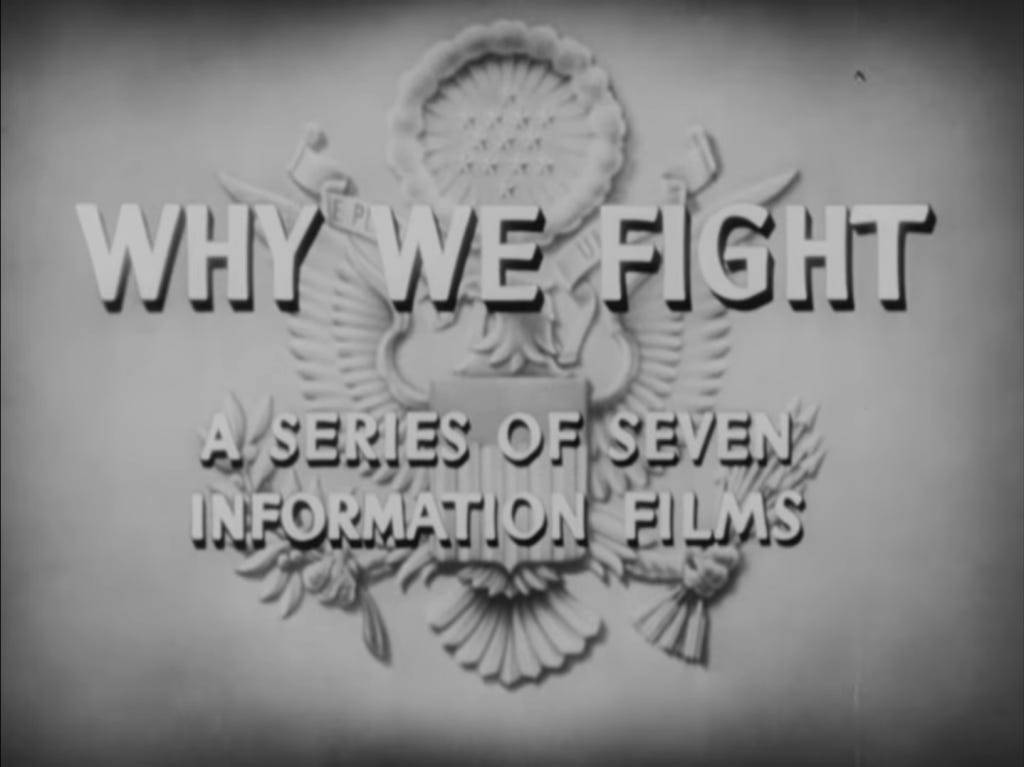
President Donald Trump is set to sign an executive order renaming the Department of Defense to the historical “Department of War,” which existed from 1789-1947. The decision is excellent and overdue.
There is a sardonic joke that the United States won every war before the creation of the Department of Defense and has lost every war since.
The joke isn’t true, but like good sarcasm, has a strong element of truth. Notable post-World War II victories included the Gulf War and the Cold War. Even military stalemates or losses like Korea and Vietnam—both part of the greater Cold War—advanced strategic objectives or bought time to forestall bigger failures.
But there is a problem in calling our military establishment the Defense Department—and it has gotten worse lately.
A brief recap of the DoD’s history: its creation was not an exercise in renaming something so it sounded kinder and gentler than “Department of War.” The War Department existed from George Washington’s administration onward. It managed the entire military until the Department of Navy was created in 1798 and a Secretary of Navy joined the cabinet of John Adams. The War Department oversaw the Army; the Navy Department oversaw the Navy and Marine Corps.
Learning lessons of World War II, during which joint operations among the armed services were a key to success, President Harry Truman in signing the National Security Act of 1947 “unified” the services under a new National Military Establishment. The act also created the Air Force as a fourth military service (evolved from the United States Army Air Forces). By 1949, additional legislation resulted in the “Department of Defense” as we know it, led by the cabinet-level Secretary of Defense. The position of Secretary of Navy lived on alongside the new Secretary of Army and Secretary of Air Force. These “service secretaries” were made clearly subordinate to the Secretary of Defense, were not in the cabinet, and basically had the job of composing and training up their services as opposed to commanding them.
Reclaiming the names “War Department” and “War Secretary” isn’t just about nostalgia for World War II and the time before, nor does it amount to a facile exercise in branding and marketing. It is necessary to clarify the mission of a military establishment that has gone badly astray, and whose performance is essential to American survival and success.
After the Cold War ended in 1991 and Bill Clinton was elected in 1992, that first Boomer president began the current trend that would lead by the end of the Biden administration to a woke military in which social experiments (e.g., transgender troops) and DEI trumped merit and warfighting skill. Bubba had written an Army colonel in 1969 about “…how so many fine people have come to find themselves still loving their country but loathing the military…” By the time he left office, Clinton commanded a much smaller and confused military that seemed to be focused primarily on disaster relief, providing humanitarian assistance, and protecting the “global commons.”
Some warned against this trend. Rush Limbaugh, a precursor of sorts of today’s New Right and MAGA coalition, repeatedly argued to his radio audience that the purpose of the military was “to kill people and break things.” That this obvious statement was distasteful to the establishment was a sign of bad things to come.
After the September 11, 2001 attacks on the United States, the warriors were briefly back in charge of the Pentagon. But not entirely and not for very long. President George W. Bush’s inability to name the animating force of our enemies—political Islam—and promulgation of irrelevancies such as “Islam is a religion of peace” combined with strategic failures in Afghanistan and Iraq ensured a mushy, bureaucrat-run national security establishment.
President Barack Obama and his laughingstock vice president, Joseph Biden, took this drift to a new level. As president, Biden would have the military celebrating transgender pride and diverting military intelligence and billions of military dollars to matters where no U.S. vital national interests exist, such as Ukraine. Members of both political parties in Congress were complicit in this drift. Military procurement was broken and the larger services fell well short of recruiting requirements, even after those requirements were reduced.
Trump has taken steps to reverse this lamentable reality, especially in ending DEI practices and firing senior officers who indulged in or were promoted through DEI practices. Recruiting has already bounced back. Trump has reduced military obligations, such as funding corrupt and repressive Ukraine, while acting decisively and successfully against immediate threats like an Iranian nuclear weapons breakout.
Changing the name back to War Department is an extension of this shift. As former Trump national security advisor Robert O’Brien told me, “The President is trying to change forty years of wokeness and misunderstanding the role of the Navy and other armed services. Warfighting was an afterthought. Trump is making clear that the purpose of the military is to fight and win wars for the United States.”
Another way to put it is that the U.S. military is not the Peace Corps with guns.
Former Secretary of State George Shultz likened diplomacy to gardening, a job of ongoing maintenance. That is fine for diplomats who mistake meetings and similar activities for actual accomplishments, and a diplomatic corps whose greatest longing is often for nothing to occur. But for the U.S. military, especially today’s all-volunteer force, there must be a mission that is greater and clearer than imperial management, pseudo-intellectual piffle about a make-believe “rules-based international order,” and just passing the time. The post-globalist United States that Trump has helped to create needs a military with a compact and clear mission—one that fits with the values and national image of the enlisted members and young officers who must do the actual fighting.
A “Defense Department” sounds like a bureaucratic morass that promotes yes-men, attends conferences ballyhooing obsolete alliances like NATO, and conducts the biggest failures in procurement in the history of organized militaries. Its generals and admirals are bureaucrats and pseudo politicians who inexplicably have more ribbons and stars on their uniforms than past heroes who won wars.
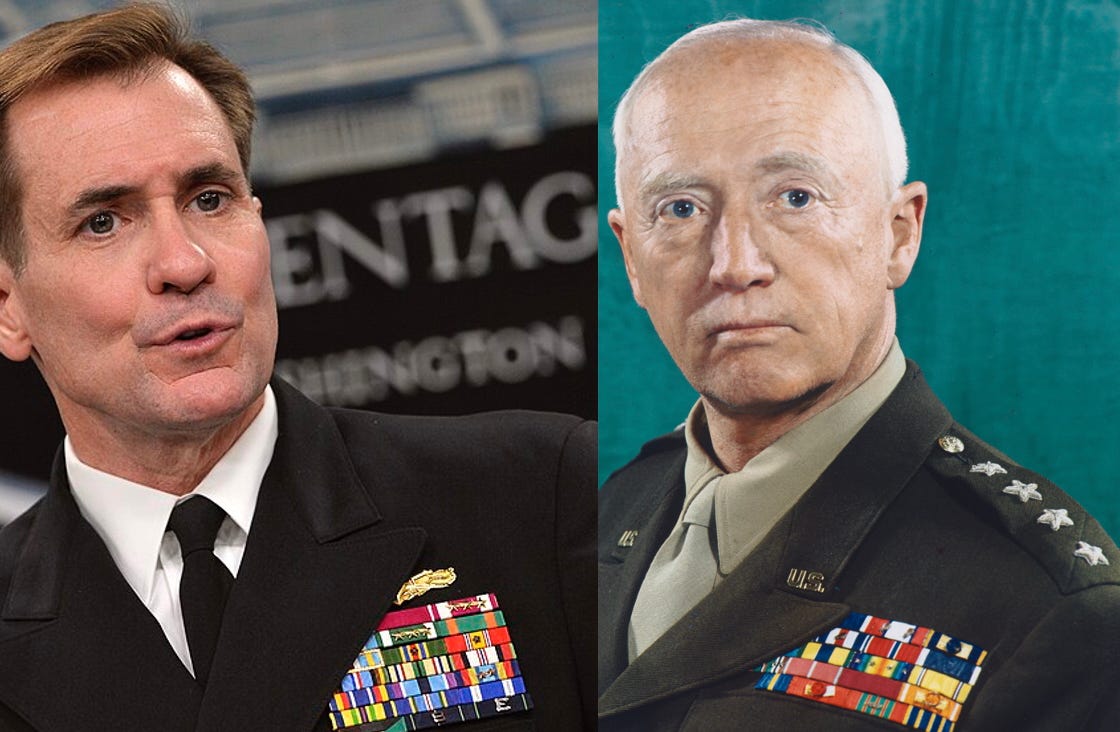
A “War Department” sounds like a dog on a president’s leash that can be let loose as needed to inflict violence on an enemy that is making war on the United States. His very presence makes such wars less likely.
Therefore, Trump is right to make this change. Each house of Congress is currently debating the annual National Defense Authorization Act. Congress should reinforce the president’s order by writing it into law, either through that authorization law or Senator Mike Lee’s stand-alone “Department of War Restoration Act.”
Changing the name to War Department will not cure all of our military’s ills. We spend nearly $1 trillion annually on defense—a level that is unsustainable for a nation that is $36 trillion in debt and that will run a deficit of about $1.8 trillion in the fiscal year concluding at the end of this month. The military has given little clear sign that it will implement the lessons of the Ukraine War: the marriage of high-tech intelligence and sensors with low-tech drones that together render legacy tools and methods of fighting obsolete. The administration has not cancelled any major weapons system or explained to the public a desire to remake the military. In fact, in a weird and edgy Oval Office performance by soon-to-be Secretary of War Pete Hegseth, the administration announced procurement of yet another fighter jet that inexplicably will have a human onboard. We still garrison Europe eighty years after the end of World War II and build aircraft carriers that cost $13 billion (without the air wing) that won’t survive in a war with China, and even though we have 11 carriers already, the newest of which will last fifty years.
Essential, radical reform of the military will remain on the to-do list. But before achievement must come intent. Trump has signaled that he intends to continue the post-globalist transformation of the United States and its military. A War Department will be better suited than a listless Defense Department to defend an America undergoing renewal.
Up From Karenism

On Sky News Australia, I discussed Karenism, real Aussies, Trump’s existential threat to the Democrats’ last line of defense in crime-ridden cities, Europe’s uselessness, and other topics. Video linked above and some talking points below.
Trump, Rudy, and Sideshow Bob
Like Bolsheviks, progressives insist not only on believing lies but forgetting accurate lessons from history. One such lesson is that cracking down on crime worked. Rudy Giuliani proved it did as mayor of New York from 1994-2001.
Before Rudy, the progressives’ truism that wasn’t true was that increased policing merely moved crime to different neighborhoods. It didn’t reduce overall crime or address the “root causes” of crime.
Rudy demonstrated that enforcing more laws, including public nuisance laws, and a tougher approach to street criminals in fact reduced crime dramatically. He sparked an urban renaissance across America that ran from the late 1990s until the Summer of Love BLM-Antifa riots in 2018 turned our cities back in to dumps.
Residents other than dotard white hippie Boomers, weirdos with purple hair, and people from Rio Linda welcome the increased policing ordered by Trump. It has had an immediate impact on violent crime in Washington, DC. It would also be beneficial in other cities mismanaged by progressives like Baltimore, Chicago, Denver, Los Angeles, etc.
Trump has attracted many new people to the Right who traditionally were not Republican, including hispanics and black men. Basically parts of all groups except for Karens. The Democrats’ final stronghold is cities in doom loops.
If Trump can help Republicans attract even a modest portion of voters in heavily Democrat cities, it will further bury the much-hated Democrat party.
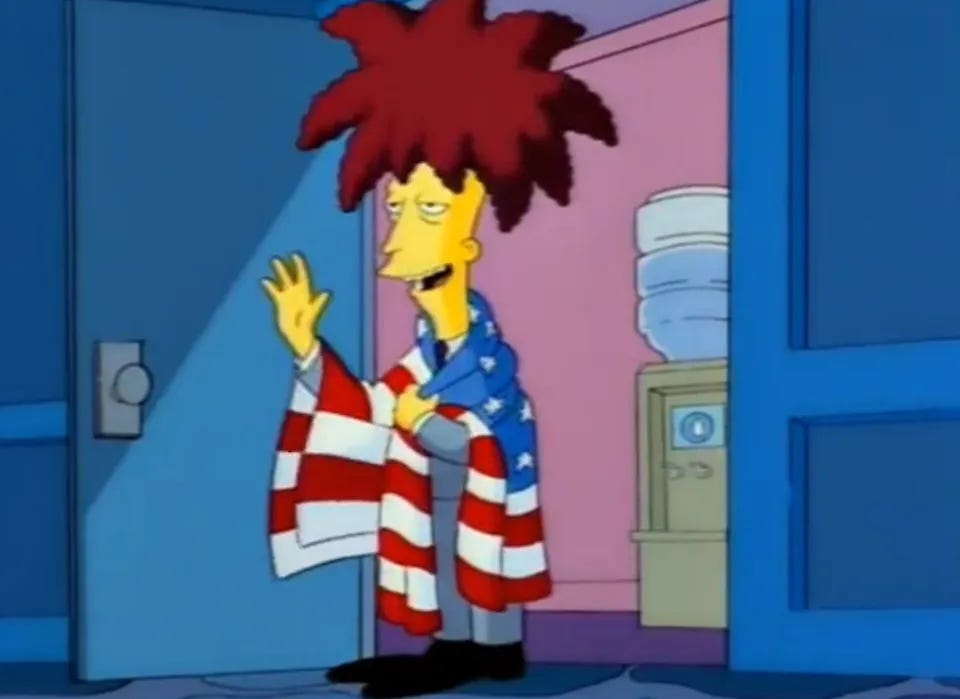
The sentiment was captured by The Simpsons of course, back when it was still quite good. After becoming mayor of Springfield, Sideshow Bob declares:
Because you need me, Springfield. Your guilty conscience may force you to vote Democratic, but deep down inside, you secretly long for a cold-hearted Republican to lower taxes, brutalize criminals, and rule you like a king!
Australia Should Not Become UK Karens of the Southern Hemisphere
Some Australians are worried that their offensive pinko prime minister has offended senior U.S. officials. Australia’s defense minister, Richard Marles, recently visited America and touted a meeting with Defense Secretary Pete Hegseth, whose press shop denied that a meeting took place and then denied the denial.
Lo and behold, the man promoted from newsreader at Fox’s weekend morning show to head of the free world’s largest military does not run an effective media shop. Marles met with Vice President JD Vance, which is a step above what many visiting ministers would get. All is reasonably well with the U.S.-Australia alliance.
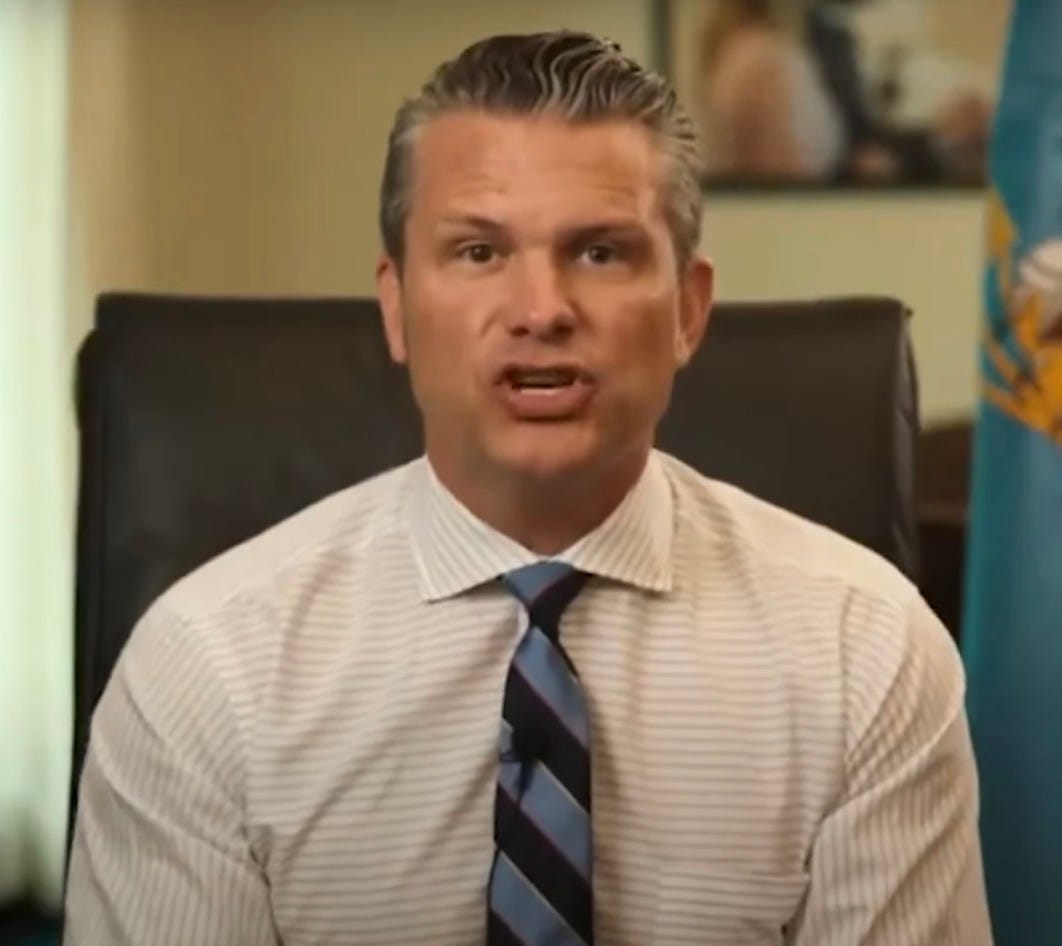
But Australians should take care not to become the equivalent of UK Karens in the Southern Hemisphere.
Australian Prime Minister Albanese is soft on China and making a show of siding with the unpopular leaders of Britain and France in declaring a Palestinian whatever at the coming UN General Assembly—a step opposed by Trump.
Even the right-leaning opposition party in Australia needs improvement. It turned Australia back into a prison state during the pandemic. Before that, a right-leaning government all but banned private ownership of guns. Sad!
Americans want to see Australians in their traditional light as good-hearted, mischievous, irreverent, and playful nonconformists who are willing to fight when necessary. Military historians know that Australia has fought with the United States in every war since World War II—more than the British or horrible French can say.
If a contrary image of socialist Karens is cemented in the minds of Americans, Americans will think less of Australians and doubt their willingness to help in a crisis with China. It’s Australia’s choice, but choices have consequences.
AUKUS, a military arrangement that includes the United States, Australia, and for some reason England, is fine, but needs to be kept in perspective. It is probably a waste for Australia (and the broader free world) to spend billions of dollars and more than a decade procuring a handful of nuclear-powered submarines. More useful might be a drone-enabled expeditionary outfit of diggers who can roam around in the Philippines or elsewhere in the Western Pacific to deter war with China.
Every war the US has engaged in exposes poor leaders. The new leaders of the DoD are wise by jettisoning top folk who went woke.
The current chest salad (ribbons) are because of near trivial awards. Being in a war zone overnight hardly makes one a warrior. Senior officers have the opportunity to add those ribbons. BTW the WW2 bunch of generals had many fewer ribbons. Didn’t hold back the big boys. Eisenhower had 10 ribbons ~3 rows covering 34 years of service. Many were multiple shown by ribbon devices. The chest salad implies little. Cold War troops might have 3-4 rows given no location awards. Still seeing some of the top officers with a full chest of ribbons makes one think.
For a guy who never bothered to wear the uniform, Whitton has a lot of thoughts about the military. He even quotes another brave warrior, Rush Limbaugh. Well, birds of a feather, you know, and in this case the bird is "chickenhawk."