
Trump Dominates
Economic Triumph and Political Surge

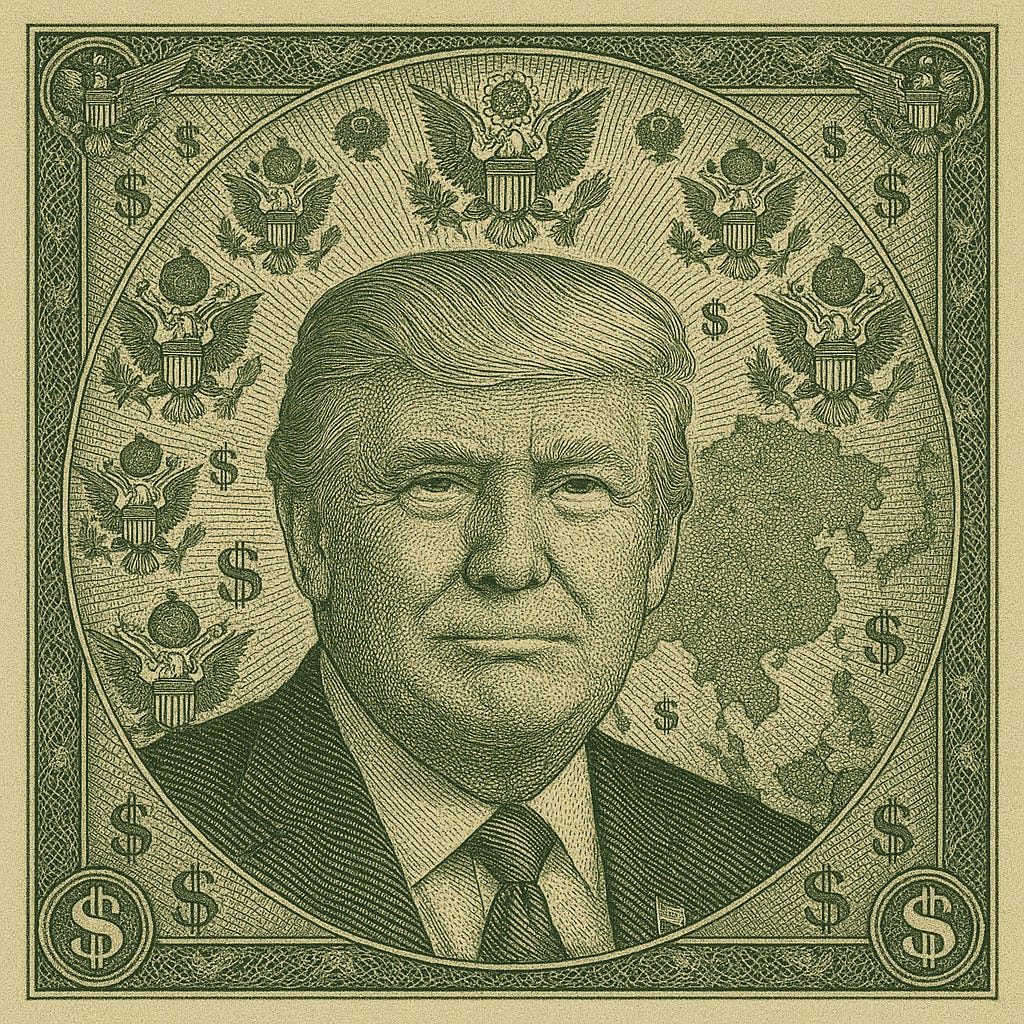
Fresh on the heels of big summits with Japanese and Australian leaders, President Donald Trump reached a landmark agreement with China today. Trump triumphed on issues ranging from rare-earth metals to U.S. agriculture and even human rights.
As Trump has deflated the risk of economic and military conflict in the Pacific, he has energized the ultimate source of American power: roaring economic prosperity at home and the moral authority that stems from success.
Trump knows that money talks and bulls--- walks.
Were it not for the Democrats shutting down the government to increase free health care for illegal aliens, the Labor Department would have reported this morning on astounding growth for the third quarter, which ended September 30.
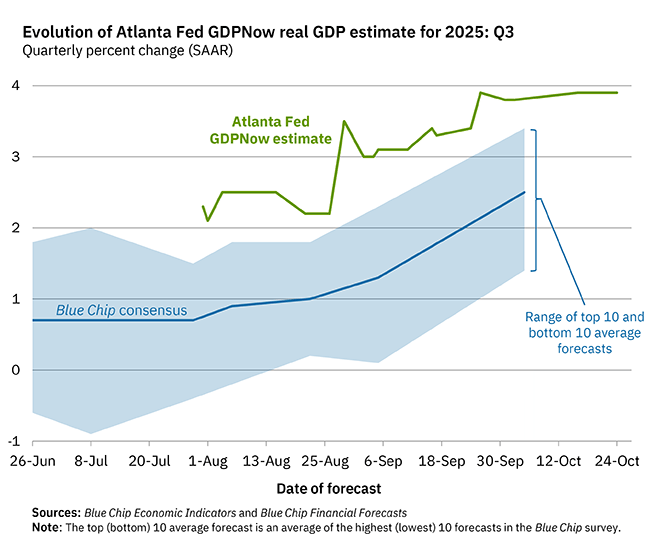
While the official number will have to wait until Democrat boss Chuck Schumer and his simple companion in the House, Rep. Hakeem Jeffries, agree to reopen the government, the Federal Reserve Bank of Atlanta estimates growth hit 3.9 percent. That occurred during a quarter in which Wall Street experts and left-wing financial media originally predicted growth of less than 1 percent.
Big-government Keynesians—who, like Jeffries, may have taken too much “Tylenol”—completely misunderstand tariffs and the expansion of the productive (i.e., supply-side) part of the economy that has begun to roar from Trump’s signature “One Big Beautiful Bill” Act and his other pro-business and deregulation efforts.
Regarding China, Trump has effectively escaped from the blind alley that the tech bros walked him into. By inflating the importance of tech-related commerce with China, it was they who created the opening for Chinese leader Xi Jinping to coerce the United States with a threat to withhold exports of rare-earth metals that are important to many high-tech defense and manufacturing applications. Against the tech bros’ wishes, Trump retaliated with tariffs and a threat of export controls on American-made software.
Trump also just completed a framework with Japan to produce rare earths independent of China. This is particularly crucial. While Trump has taken steps to mine, mill, and produce rare earths domestically—and initiated deals with Australia, Cambodia, Malaysia, Thailand, and Vietnam—Japan is America’s most important ally and has itself successfully overcome coercive Chinese restrictions on rare-earth exports.
Furthermore, Trump’s rapport with Japan’s new prime minister, Sanae Takaichi, was remarkable. It sets up a repeat of the unique dynamic of Trump’s first term in which the American president’s strongest foreign connection is with the prime minister of Japan: then Shinzo Abe, now Takaichi. Considering Trump cemented much of his worldview during the 1980s era of economic tension with Japan, this new era of cooperation reflects a stark reversal in economic and national security reality—with both Washington and Tokyo benefiting from Trump–Takaichi diplomacy.
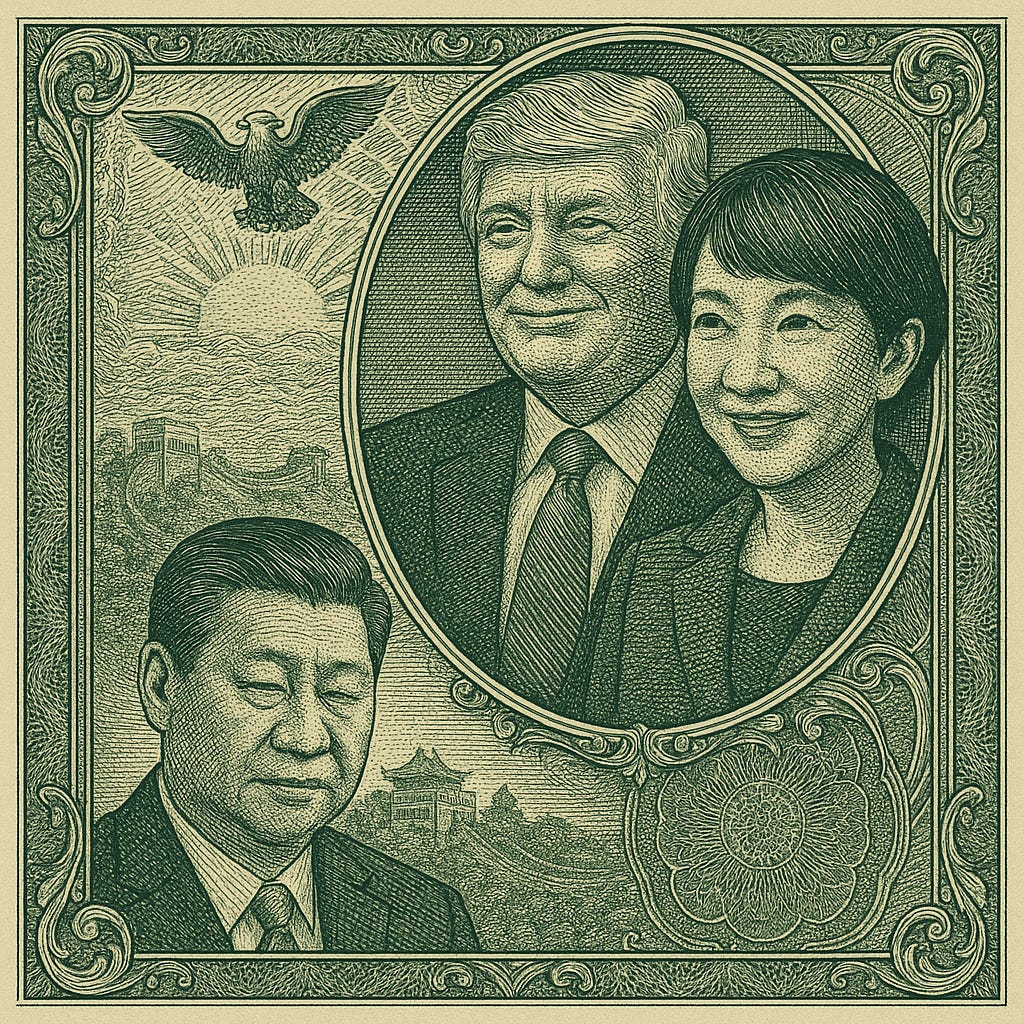
As for the China deal, Trump secured promises from Xi to crack down on illegal fentanyl exports, buy American soybeans, and call off threats to withhold exports of rare earths. The last concession amounts to China agreeing to bury an ace it had up its sleeve while the free world liberates itself from Chinese rare earths.
For the rest of Beijing’s promises, the United States will have to wait and see if China complies. Beijing welched on a deal to buy U.S. goods in Trump’s first term. This time around, China has already made a small purchase of 180,000 tons of soybeans—hopefully on its way to its pledged quantity of 12 million tons by January and 25 million tons annually thereafter. Any noncompliance, hopefully, will trigger strong U.S. retaliation and a decision to strategically decouple from China.
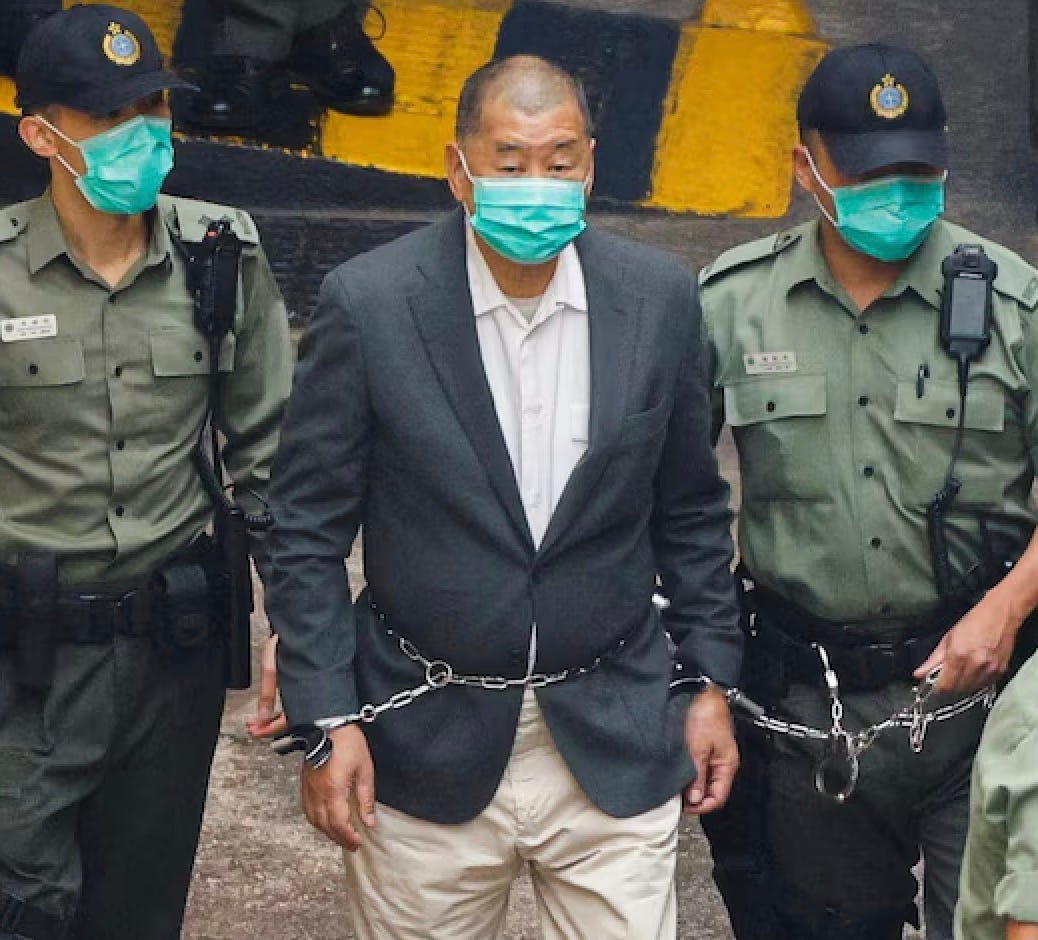
According to usually reliable sources, Trump also raised the issue of wrongfully imprisoned Hong Kong publishing tycoon Jimmy Lai. Guilty of running a highly popular pro-democracy tabloid before it was expropriated and obliterated by Chinese authorities, Lai is a hero among Catholics, Chinese, and others for his decision to face indefinite jail in China even though he could have fled abroad and lived a life of luxury. Trump promised in advance he would bring up Lai with Xi, and my sources indicate he fulfilled this promise.
The significance of this should not be overlooked for two reasons. First, lefty know-nothing know-it-alls say Trump is merely “transactional” in his dealings with allies and adversaries alike, seeking only instant gains. The implication is that Trump disregards the underlying morality that has been present in how America views the world since settler John Winthrop predicted in 1630, “We shall be as a city upon a hill,” which sets an example for others. In raising a controversial issue with Xi that risked upsetting the dictator, Trump proved again that America First foreign policy is not as simple and simplistic as its critics contend.
Second, Trump echoed Ronald Reagan in demonstrating that raising human rights can paradoxically help instead of hinder efforts for a broader deal with communist opponents. Reagan championed the cause of wrongfully imprisoned Soviets and even met with dissidents at the U.S. embassy in Moscow. Yet he was still able to conclude the most sweeping nuclear arms control deal in history with the Soviet Union, which banned an entire class of nuclear delivery systems. Reagan’s confidence in the power of the United States and the moral correctness of his argument actually advanced relations with Moscow.
In seeking Lai’s release, Trump has renewed this successful formula of presidential power. He has also brought human rights back to the basics of right versus wrong by personifying the matter: in this case Lai, and in many other cases in which Trump has freed people from wrongful detention around the world.
Out is exporting woke nonsense and high-minded bromides about one-size-fits-all democracy and a make-believe “rules-based international order” that exists in pinko classrooms and nowhere else. Back is the basic truth of fair and not fair, stated politely but plainly to those among our adversaries who would rather not see it.
Of course, this must all be backed up by credible military and economic power, which often are mutually reinforcing for the United States. Trump has given himself power that predecessors like Joe Biden and Barack Obama lacked out of their own weakness and anti-Americanism.
The unreported rapid growth of the U.S. economy is accompanied by near-record-high stock-market indexes, low gasoline prices, modest increases in real hourly wages, and well-controlled inflation. Furthermore, this is taking place before the investment Trump has drawn to the United States has had a chance to propel more growth, and despite a renegade and unconstitutional Federal Reserve that is as determined to tank Trump’s economy as it was to help Biden’s, shamelessly causing the worst inflation in a generation along the way.
In 2008, Peer Steinbrück, the finance minister of Germany, said, “The United States will lose its superpower status in the world financial system.” One would think the Germans of all people would know better than to bet against the United States. Trump’s revival at home and abroad is prevailing. The naysayers have been wrong. From the Democrats in Congress to the America-haters of the media and Silicon Valley to the magnificent moochers of Europe, Trump’s opponents are experiencing what it is like to be dominated by a real president.
Domino Theory
New episode:
Short: Did China make a big mistake in energizing the USA over rare earths?